
A compassionate pathway to end-of-life care at home in Australia
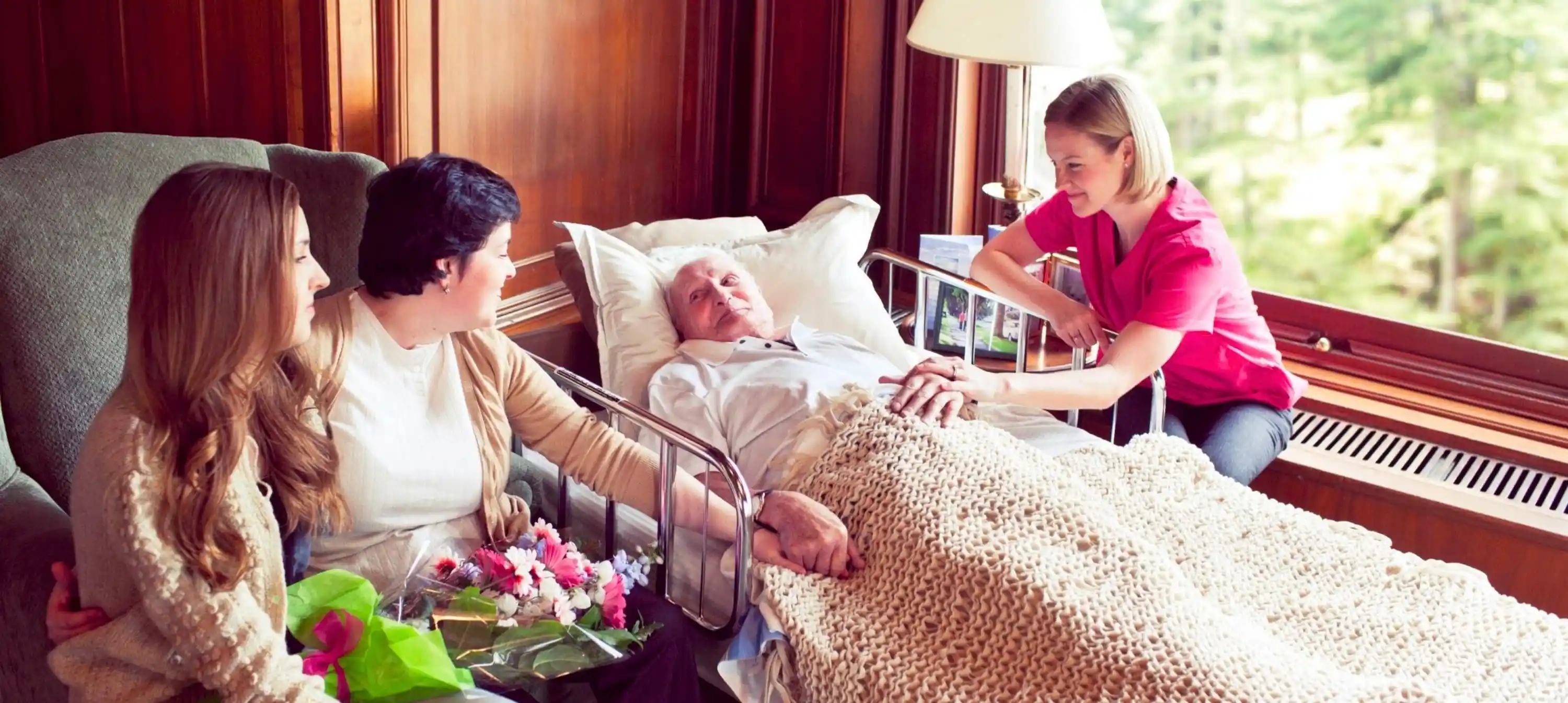
When a loved one is nearing the end of life, the desire for many Australians is to spend their precious remaining time in a place that feels safest - the familiar surroundings of their home. That is why the Australian Government’s Support at Home End-of-Life Pathway is designed to help make that possible, by fast-tracking access to short-term, intensive in-home support for eligible people in their final months.
At Nurse Next Door Home Care Services, we believe your final days should be spent in the comfort and peace of home.. Below is a clear, practical guide to what the End-of-Life Pathway is, who it’s for, what it can fund, what it may cost, and how families can use it as a practical, dignified pathway to support at home.

What is the End-of-Life Pathway under Support at Home?
The End-of-Life Pathway is a high-priority, short-term pathway within the Support at Home program. It supports older people diagnosed with 3 months or less to live who want to remain at home by providing additional funding to access in-home aged care services.
A key point for families: the End-of-Life Pathway is designed to work alongside state and territory palliative care services, not replace them, so specialist palliative care can continue to focus on symptom management and comfort, while Support at Home funding helps cover the day-to-day supports that make staying at home achievable.
How much funding is available and for how long?
If approved, the End-of-Life Pathway provides $25,000 over 12 weeks for extra home care services.
If there are funds remaining after 12 weeks, you can continue using them for an additional 4 weeks (up to 16 weeks total) to support continuity.
If care is needed beyond that, an urgent/high-priority Support Plan Review may be requested to transition to ongoing Support at Home services.
Please note that his pathway funding replaces any other funding you may have through My Aged Care for the time you’re on the End-of-Life Pathway.
Am I eligible for the End-of-Life Pathway?
The End-of-Life Pathway can only be used once which is they, to be eligible, My Aged Care states you must be:
- 65 years or over, or
- 50 years or over for Aboriginal and Torres Strait Islander people
A doctor or nurse practitioner must also complete the End-of-Life Pathway form and confirm:
- an estimated life expectancy of 3 months or less, and
- you are in bed more than 50% of the time (equivalent to AKPS 40 or lower on the Australian-modified Karnofsky Performance Status).
What is an AKPS score?
The Australian-modified Karnofsky Performance Status (AKPS) is a clinician-used scale that summarises a person’s functional ability (for example, how much time they spend in bed and how much help they need).

What services can the End-of-Life Pathway cover?
The End-of-Life Pathway provides funding for services on the Support at Home service list, aligned to assessed needs. These are the same service groupings available through Support at Home, including:
- Clinical supports (e.g., nursing care, occupational therapy, physiotherapy)
- Independence supports (e.g., showering, dressing, medications, transport, respite)
- Everyday living (e.g., cleaning, gardening, shopping, meal preparation)
If approved, you’ll receive an individual support plan and budget to share with your provider. This may include a separate budget for assistive technology (products and equipment), depending on needs.
Will there be out-of-pocket costs?
Because the End-of-Life Pathway sits within Support at Home, participant contributions may apply to some services, especially in the independence and everyday living categories, depending on your individual circumstances.
However, clinical supports (such as nursing care) are fully funded by the government and no contribution applies for those services.
For the clearest up-to-date explanation, My Aged Care also links to Support at Home costs and contributions.
How to access the End-of-Life Pathway
When time is short and families feel overwhelmed, clarity matters. Here’s the process in plain language:
1) A doctor or nurse practitioner completes the End-of-Life Pathway form
The form is completed and used as part of the assessment process to confirm eligibility.
2) Request a high-priority assessment
The pathway is designed as priority access. People can access urgent support even if they are not currently receiving Support at Home services, via a high-priority aged care assessment.
My Aged Care lists several ways to request access this assessment, including:
- Calling My Aged Care on 1800 200 422
- Visiting an Aged Care Specialist Officer (ACSO) at select Services Australia centres. ACSO appointments can help with in-depth information and referral support through My Aged Care face-to-face services
- Using the Apply online tool
- Speaking with a medical professional who may request an assessment on your behalf
If you’re already receiving Support at Home services, your current provider can request an urgent Support Plan Review to access the End-of-Life Pathway (often reducing delays).
3) An assessor confirms eligibility and a support plan is issued
Behind the scenes, eligibility is confirmed by an aged care assessor through the national assessment process (the Single Assessment System, supported by consistent assessment tools).
4) Services are activated quickly with your chosen provider
Once approved, My Aged Care issues a Notice of Decision and a support plan, and you can work with your provider to coordinate the services needed.

Can the End-Of-Life Pathway be used alongside palliative care or Voluntary Assisted Dying (VAD)?
Yes. My Aged Care states the End-of-Life Pathway can be used alongside state-funded palliative care, and accessing Voluntary Assisted Dying (VAD) services does not prevent someone from accessing the End-of-Life Pathway (the same eligibility criteria apply).
Why it matters: choice, dignity, coordination
When this pathway works well, it helps create space for what matters most.
- Choice & control: More opportunity to remain at home, in familiar surroundings.
- Dignity: Support focuses on comfort, respect, and day-to-day needs in the final stage of life.
- Coordination: It brings practical supports around the person and complements palliative services already in place.
How Nurse Next Door supports end of life care at home
End of life care is never one-size-fits-all. Needs can change quickly, sometimes day to day.
Nurse Next Door provides premium in-home support focused on warmth, dignity, and responsiveness, so families spend less time coordinating and more time simply being together.
Nurse-led care, with a dedicated Care Designer (Registered Nurse):
At Nurse Next Door, your care is overseen by a Care Designer who is a Registered Nurse, providing nurse-led guidance, coordinating services, and adjusting care as needs change, so support stays consistent and calm.
Depending on your support plan and needs, we can help with:
- Respectful personal care that protects dignity
- Respite care so carers can rest and recover
- Overnight support for reassurance and safety
- Everyday help that reduces pressure in the home (meals, light tasks, routines)
- Working alongside your treating team and palliative services to keep support coordinated
If you’re supporting someone who wants to remain at home, the End-of-Life Pathway can be a meaningful way to bring in extra help—fast—so the final weeks are centred on comfort, dignity, and togetherness.
This is part of our commitment to Making Lives Better, bringing compassionate, quality care right to your door.
General information only - For advice tailored to your situation, speak with your GP, nurse practitioner, or treating team.

Helpful resources
- Department of Health: Support at Home End-of-Life Pathway summary
- Department of Health: End-of-Life Pathway form
- Services Australia: Aged Care Specialist Officer (ACSO) information Services Australia
- Department of Health: Support at Home participant contributions
- Department of Health: Single Assessment System / needs assessments